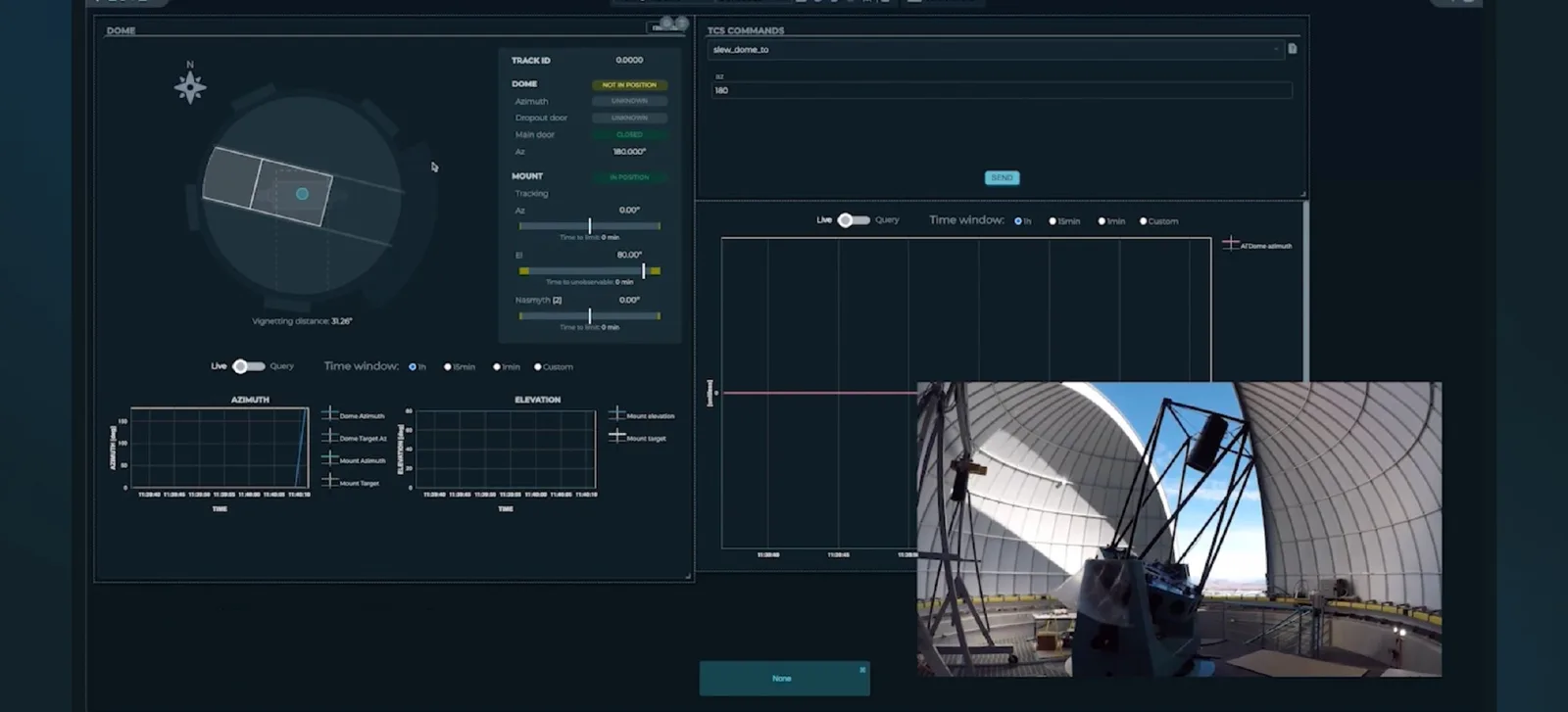
Prototype to find the requirements
In phase one (2017–2018), prototypes in front of experts surfaced requirements that documents couldn't.
Case study 04 · Rubin Observatory
✓ ShippedFor four and a half years I designed the operators' interface for the Vera C. Rubin Observatory, before its main users, its data or much of its hardware existed. We built it as a framework, so Rubin's own team could keep extending it.
The Vera C. Rubin Observatory, on Cerro Pachón in Chile, carries the largest digital camera ever built for astronomy: 3.2 gigapixels, covering 9.6 square degrees per image. Operators will run it from a control room that monitors more than 65 systems.
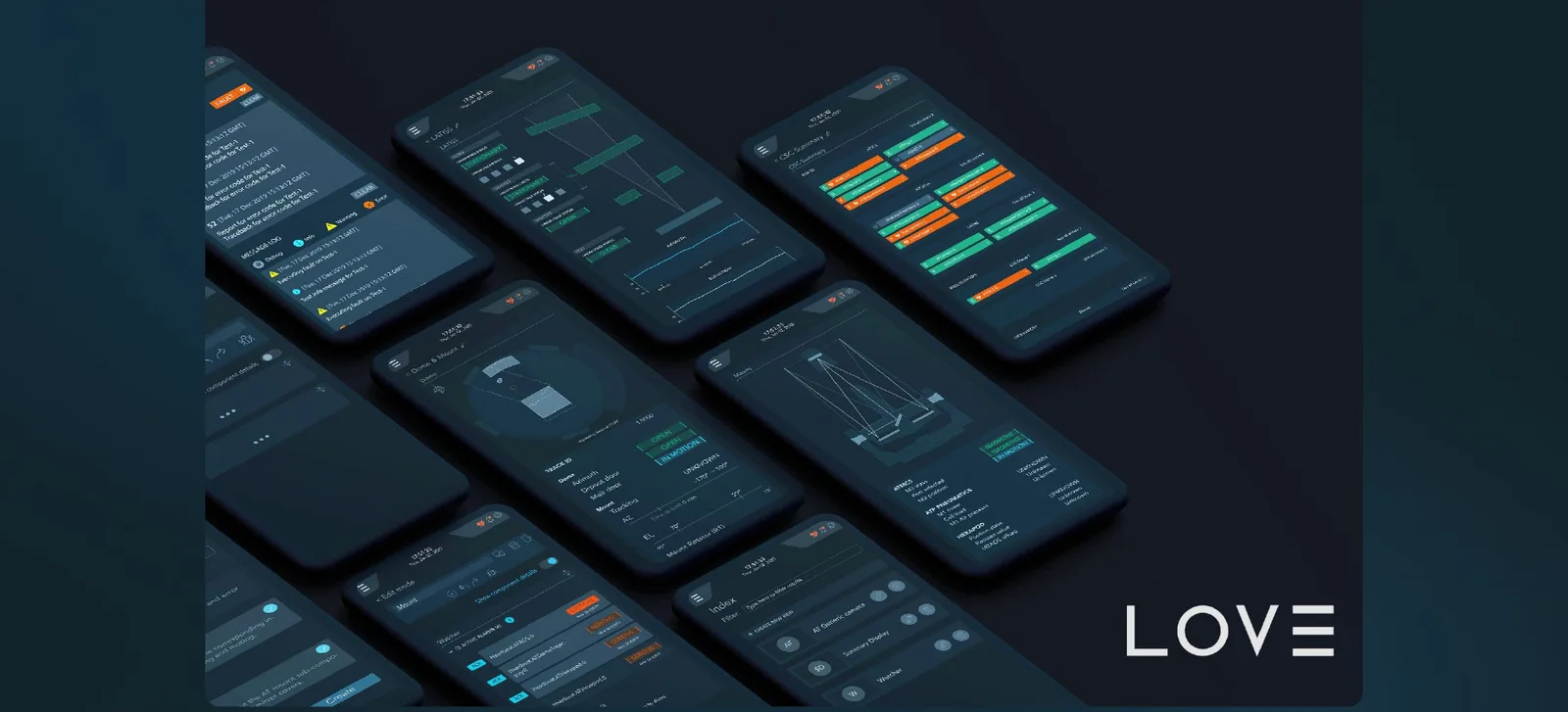
L.O.V.E. (the LSST Operators' Visualization Environment) is that control room's interface. Inria Chile and Inria France designed and built it with Rubin's team.
I led the design across both phases: research with telescope experts, the component method, the interface and the UI framework. I worked with three developers and a project manager, and proposed a layout for the control room itself: shared screens and workstations.
When we started in 2017, the telescope was being built. There were no operators to watch, no live data and few final requirements. Engineers knew their own subsystem deeply, but nobody had seen the whole control room working.
The interface had to work for years of change: new hardware, new procedures and a ten-year survey plan.
Without users to observe, I built a repeatable method. Every component went through seven steps:
In phase one (2017–2018), prototypes in front of experts surfaced requirements that documents couldn't.
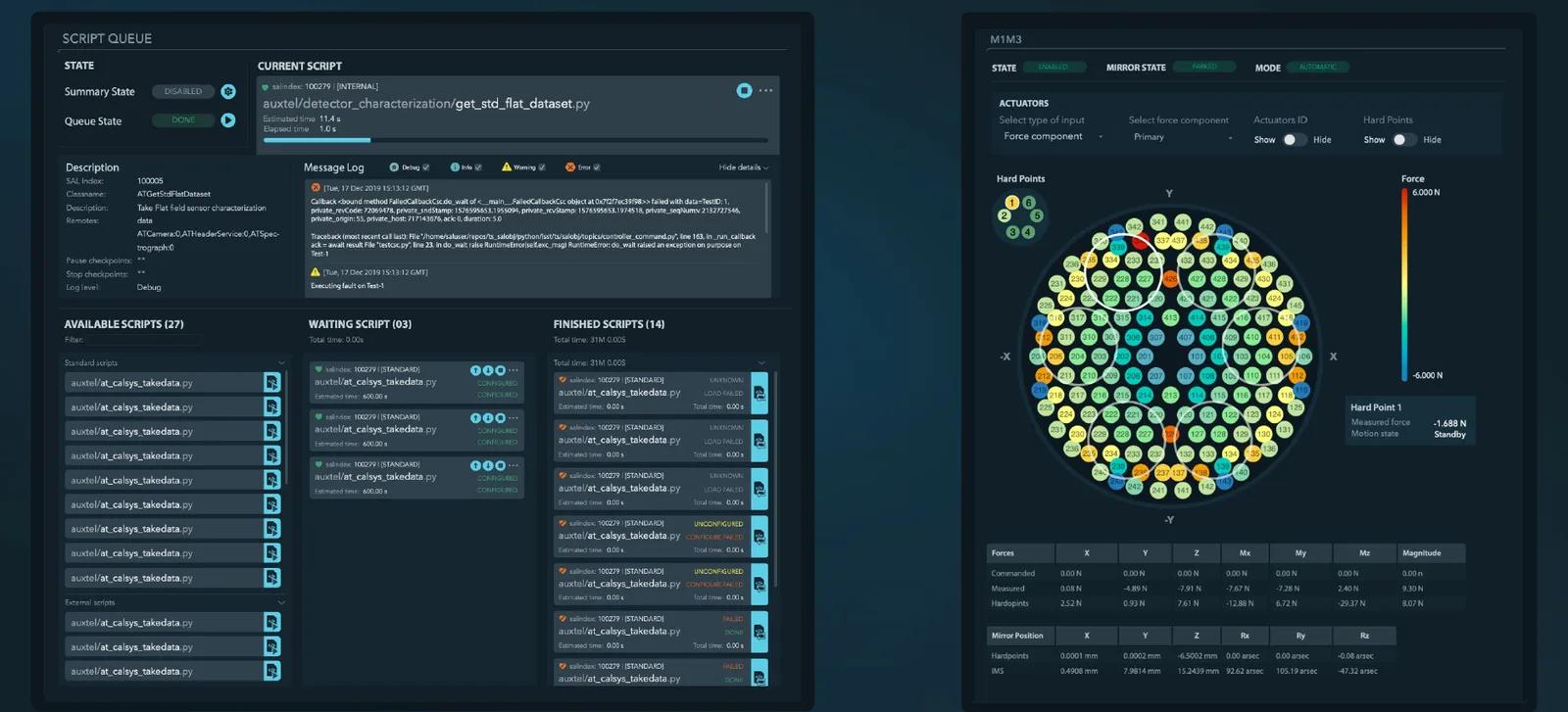
Operators build their own views from components, so Rubin can extend L.O.V.E. over its ten-year plan without us.
The existing force map's colour scale hid the values engineers needed. I redesigned its colour scale so engineers could read the forces they needed at a glance.
I proposed the control room layout: which screens are shared, which are personal.